Contents · 7 sections
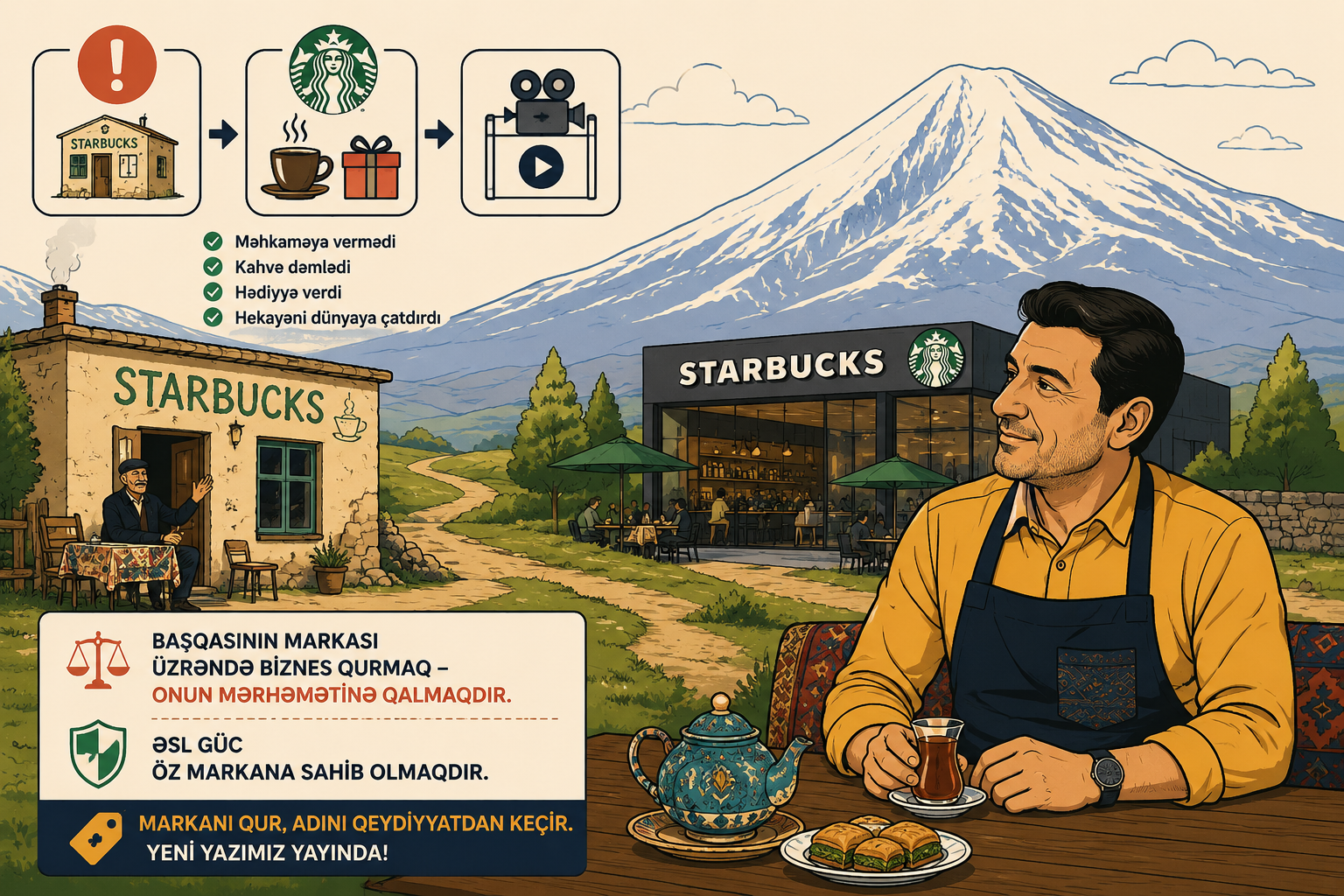
At the foot of Mount Ararat, in Doğubeyazıt, a modest tea house became famous under the name "Starbucks." What did the real Starbucks do when it saw this? It could have sued and shut it down. But instead, it went, brewed coffee, gave gifts, and turned this story into a part of its own brand — a documentary was even made about this story.
A beautiful story. But beware: this is luck, not the rule. You may not be that lucky. This article shows both the luck and the real risk in branding.
1. The lucky story: when a brand is confident in itself
Why did Starbucks behave this way? Because the brand fully owns its name — it feels no threat. That's why it could turn the conflict into advertising. This is the luxury of a strong brand: in return, it gained a positive story that spread worldwide.
A few global brands have also chosen a similar "courteous" path — for example, some big brands have sent friendly, even humorous warnings to small fans instead of harsh lawsuits, and gained a positive reputation from it. But these are exceptions — they become news because they are rare.
2. But you may not be that lucky
The reality is this: most brands don't behave this way. A small business using their name without permission faces a warning, a lawsuit, and closure. You are not Starbucks, such that a big brand would come and brew coffee for you — on the contrary, a big brand may come to your door with a lawyer's letter.
Building a business on someone else's brand means depending on their mercy. The day they want, you lose the name, and years of work, your signboard, your customer recognition disappear in an instant.
3. Burger King's lesson: even a giant can be blocked
The strongest example is a giant. In 1971, when Burger King wanted to enter Australia, it saw that the name "Burger King" was already registered by a local entrepreneur (by the owner of a small diner in Adelaide).
The result? One of the world's largest fast-food brands could not use its own name and began operating in Australia under the name "Hungry Jack's" — the only place in the company's history where it was forced to change its name. Later it tried to get the name back, lost in court, and paid the local franchisee approximately 47 million dollars in compensation.
The lesson is clear: registration in one country does not grant rights in another; local registration is stronger than global fame. If even Burger King can be blocked like this, a small entrepreneur can be blocked even more easily.
Useful information box
3 hard truths about branding: (1) Register first — if you don't register your name, someone else can register it and deprive you of your own name. (2) One country ≠ the world — separate registration is needed in each market. (3) Don't build on someone else's name — that is their asset, not yours.
4. The "squatter" risk: those who take your name before you do
Another danger: someone can register your brand name before you do. Then they either "sell it back" to you at a higher price, or refuse to give it up at all — and you are forced to build an entirely new name. This is a loss of money, time, and business value alike.
Moreover, when a brand is not protected, it can turn into a generic word and lose its legal protection too — many famous names in history have lost their exclusive rights this way.
5. The lesson: a brand is not a matter of chance
Starbucks was lucky — or rather, it was strong, because it owned its name. You can gain that strength too, but only in one way: by registering your own brand, your own name — in advance.
Doğan's Note
"Everyone shares that beautiful Starbucks story — but they miss the real lesson. Starbucks could afford to be generous because the name was firmly its own. Burger King, on the other hand, became a global giant, yet a small entrepreneur took its name away from it in his own country. The difference is not in luck, but in registration. I always tell entrepreneurs: register your name before you hang the sign. Your brand is your most valuable — yet most often forgotten — investment."
Conclusion
"There's a Starbucks out there in the distance" — a beautiful story, but it is a story of chance. You cannot rely on chance. When even a giant like Burger King cannot protect its own name, the rule is even stricter for a small entrepreneur: register your brand in advance, do not build on someone else's name. True power lies not in generosity, but in ownership.
How does DK Agency help?
DK Agency supports entrepreneurs in building, registering, and protecting their brands — from geographical indications to franchise systems. As one of the founders of AFA, brand law is at the center of our work. Because for us, a brand is not just a name, but an asset that must be protected: The Mark of Mastery, the Shield of the Digital.
Next step: Thinking about registering your brand? Contact DK Agency for a free initial assessment.
Source: Starbucks Türkiye official post and the documentary "The Sweetest Branch / From Ağrı Dağı Tea House to Starbucks" (2024); Burger King – Hungry Jack's Australia trademark dispute (Wikipedia, CWB IP, World Trademark Review). This article is general information, not legal advice.
How DK Agency helps
If what this post describes is happening in your restaurant, café or hotel, write to us: we will look at it together and show you the first step. The first diagnostic is free.
Ask KAZAN AI about this topic
Your dish, your numbers. KAZAN AI answers from the DK knowledge base and points you to the right tool.
Open KAZAN AI