
Contents · 5 sections
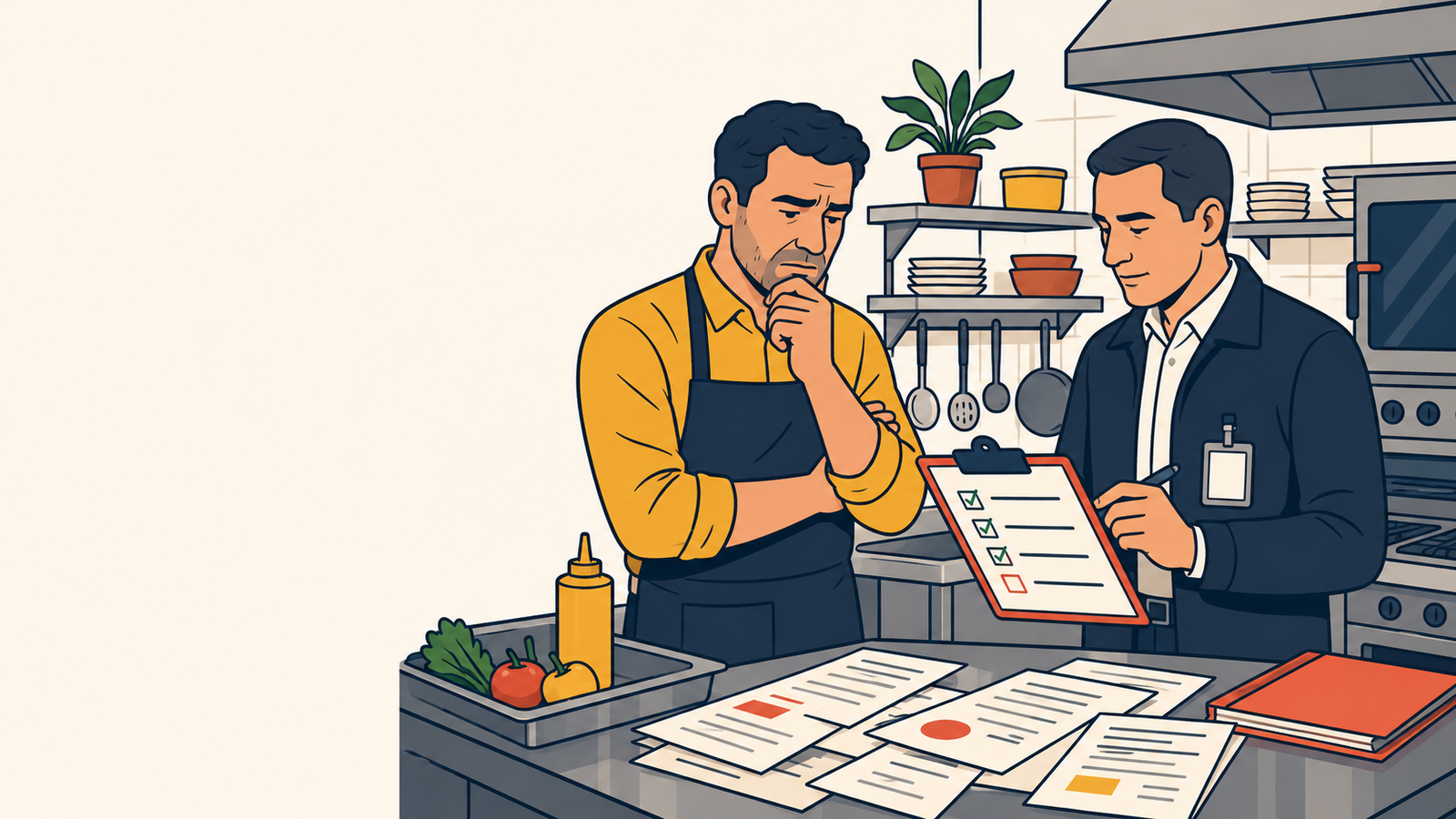
The head chef fell ill. The chef who came to replace him asks: "How much chicken goes into Chicken Sac?" No one knows exactly. One says 200 grams, another says 300. The customer complains: "Last week the portion was big, this time it's small."
The waiter is new. "The customer wants the bill — do we accept cards?" No one gives a precise answer. One says "yes," another says "ask for cash."
Cleaning time has come. Who cleans what? No one knows. Everyone waits for each other. No one does it.
This is the result of the absence of a system. And this is the daily reality of many restaurants in Baku. Everyone works according to their own judgment, because there is no written standard.
The operations manual (corporate handbook — operational instructions) is the document that ends this chaos. In this article, I explain what it is, why it is necessary, and how to prepare it.
What is an operations manual?
In simple terms: the restaurant's "textbook." It contains the written rules of every process in the restaurant — from the kitchen to the dining hall, from opening to closing, from hiring to customer complaints.
Why "handbook"? Because a new employee comes, reads it, and knows what to do. Even without the owner, the restaurant operates at the same quality. No one says "but this is how I knew it" — because it is written down.
McDonald's 38,000+ restaurants operate at the same standard all over the world. In Tokyo, in Baku, in Des Plaines, the hamburger tastes the same. This is not a coincidence — it is thanks to a detailed operations manual. The McDonald's brothers created the "Speedee Service System" in 1948, Ray Kroc turned it into a handbook, and today it is the largest restaurant system in the world.
You don't manage 38,000 restaurants — but if your 1 restaurant doesn't have a handbook either, even 1 restaurant doesn't operate properly.
What should be in the handbook? 8 sections
Section 1: The restaurant's mission and values
- Who are we? Why do we exist?
- What do we promise the customer?
- The team's principles of conduct
These are not "pretty words" — they are a decision-making framework. If an employee is in a difficult situation, they look at the mission and know what to do.
Section 2: Job descriptions
For each position:
- Position title
- Who they report to
- Main responsibilities (5-7 items)
- Expected skills
- Working hours, shift system
Example — Waiter job description:
- Reports to: Head Waiter / Shift Manager
- Responsibilities: Greeting customers, taking orders, food service, presenting the bill, setting the table
- Skills: Communication, POS usage, menu knowledge, upselling
- Shift: 10:00-22:00, rotation system
Section 3: Recipes and portion standards
- The standard recipe for each dish (recipe card)
- Portion size (grams, with photo)
- Plating rules (plating — garnishing)
- Food cost and sale price
This section is the expanded version of the recipe card system in our "Food Cost" article.
Section 4: Service standards (Service SOP)
SOP — Standard Operating Procedure:
- When a customer arrives, they must be greeted within the first 30 seconds
- Water must be placed on the table within 2 minutes
- After the order is taken, the food must arrive within 15-20 minutes (depending on the concept)
- When the bill is requested, it must be brought within 3 minutes
- When the customer leaves, the question "did you have a good time?" must be asked
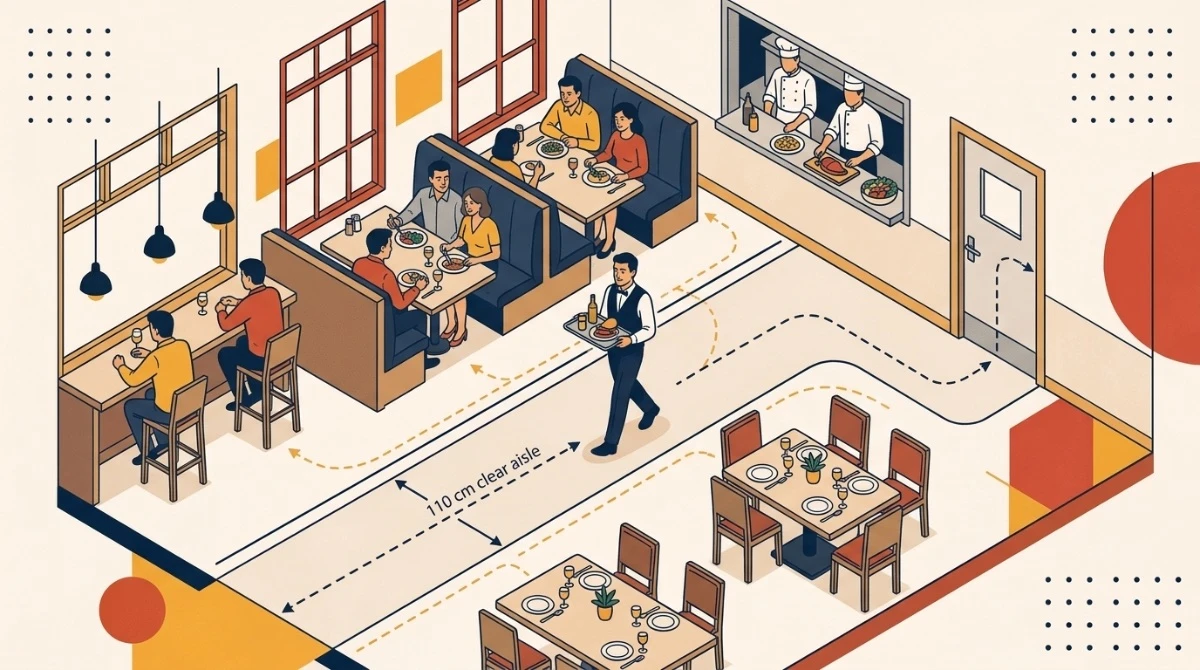
These speeds must be measured — as we said in our "Atmosphere" article, measure the customer's path with a stopwatch.
Section 5: Opening and closing procedures
Opening checklist (every day):
- Check refrigerator temperatures, record in the log
- Prepare the kitchen stations
- Prepare the hall — tables, chairs, menus, spices
- Turn on the POS, check the cash register
- Turn on the music system, select the playlist
- Check the lights
- Check the restrooms
- Hold a pre-shift meeting
Closing checklist (every day):
- Count the cash register, print the report
- Clean the kitchen, turn off the equipment
- Check refrigerator temperatures one last time
- Clean the hall
- Lock the doors, arm the alarm
Section 6: Hygiene rules
The internal version of all hygiene standards from our AQTA article:
- Daily, weekly, monthly cleaning schedule
- FIFO rule
- Cross-contamination rules
- Medical certificate renewal calendar
- Pest control plan
Section 7: Crisis management
- Customer complaint → 5-step resolution procedure
- Food poisoning claim → what to do?
- Employee injury at the workplace → first aid, documentation
- Power/water outage → alternative plan
- Fire → evacuation plan, FHN procedure
- Social media crisis → who responds, how?
Section 8: Financial rules
- Daily cash register counting procedure
- Purchasing rules (price from a minimum of 3 companies)
- Stock count frequency and procedure
- Who reviews the P&L, and when it is reviewed
How to prepare the booklet? 4 steps
Step 1: Write down the existing processes
How do you work now? Have the head chef, head waiter, shift manager — each of them talk through their processes, and write them down. "This is how we do it" — turn it into writing.
Step 2: Standardize
The transformation from "this is how we do it" → "this is how we must do it." Each process should have one correct way. Time limits, measurements, sequence — write them precisely.
Step 3: Visualize
Text alone is not enough. Add images:
- A photo of plating on the plate
- A photo of the correct refrigerator arrangement
- A photo of the table layout
Step 4: Conduct training and update
The booklet has been written — but if it stays on the shelf, its value is zero. Every new employee must read the booklet in their first week and sign it. The booklet must be updated every 6 months — processes change, the menu changes.
"But I don't have time" — the most common excuse
The handbook doesn't need to be written in one night. Write 1 section per week:
| Week | Section | Estimated time |
|---|---|---|
| 1 | Mission + values | 1 hour |
| 2 | Job descriptions | 2 hours |
| 3 | Opening/closing checklist | 1 hour |
| 4 | Service standards | 2 hours |
| 5 | Hygiene rules | 1.5 hours |
| 6 | Recipe cards (first 10 dishes) | 3 hours |
| 7 | Crisis management | 1.5 hours |
| 8 | Financial rules | 1 hour |
8 weeks — 13 hours — your handbook is ready. 13 hours of investment, benefits for years.
CORPORATE HANDBOOK CHECKLIST
| # | Section | Ready? |
|---|---|---|
| 1 | Mission and values are written | ☐ |
| 2 | There is a job description for every position | ☐ |
| 3 | Recipe cards (at least top 20 dishes) are ready | ☐ |
| 4 | Service SOPs are written (including time limits) | ☐ |
| 5 | Opening checklist exists | ☐ |
| 6 | Closing checklist exists | ☐ |
| 7 | Hygiene rules are written | ☐ |
| 8 | Crisis management plan exists | ☐ |
| 9 | Financial rules (purchasing, cash register, stock) are written | ☐ |
| 10 | The handbook is included in new employee onboarding | ☐ |
💡 DK Agency: Preparing a corporate handbook takes time — we prepare it for you. The DK Agency team comes to your restaurant, records all processes, standardizes them, and delivers a ready-made handbook. Service SOPs, recipe cards, hygiene rules, training materials — all included.
📧 info@dkagency.com.tr | 🔧 Free tools | 🌐 Marketing Ocağı
How DK Agency helps
If what this post describes is happening in your restaurant, café or hotel, write to us: we will look at it together and show you the first step. The first diagnostic is free.
Ask KAZAN AI about this topic
Your dish, your numbers. KAZAN AI answers from the DK knowledge base and points you to the right tool.
Open KAZAN AI