Contents · 6 sections
Opening a new café or restaurant sounds romantic. But in 2026, a smart entrepreneur asks one question: why build from scratch if I can buy a business that's already running and already has customers?
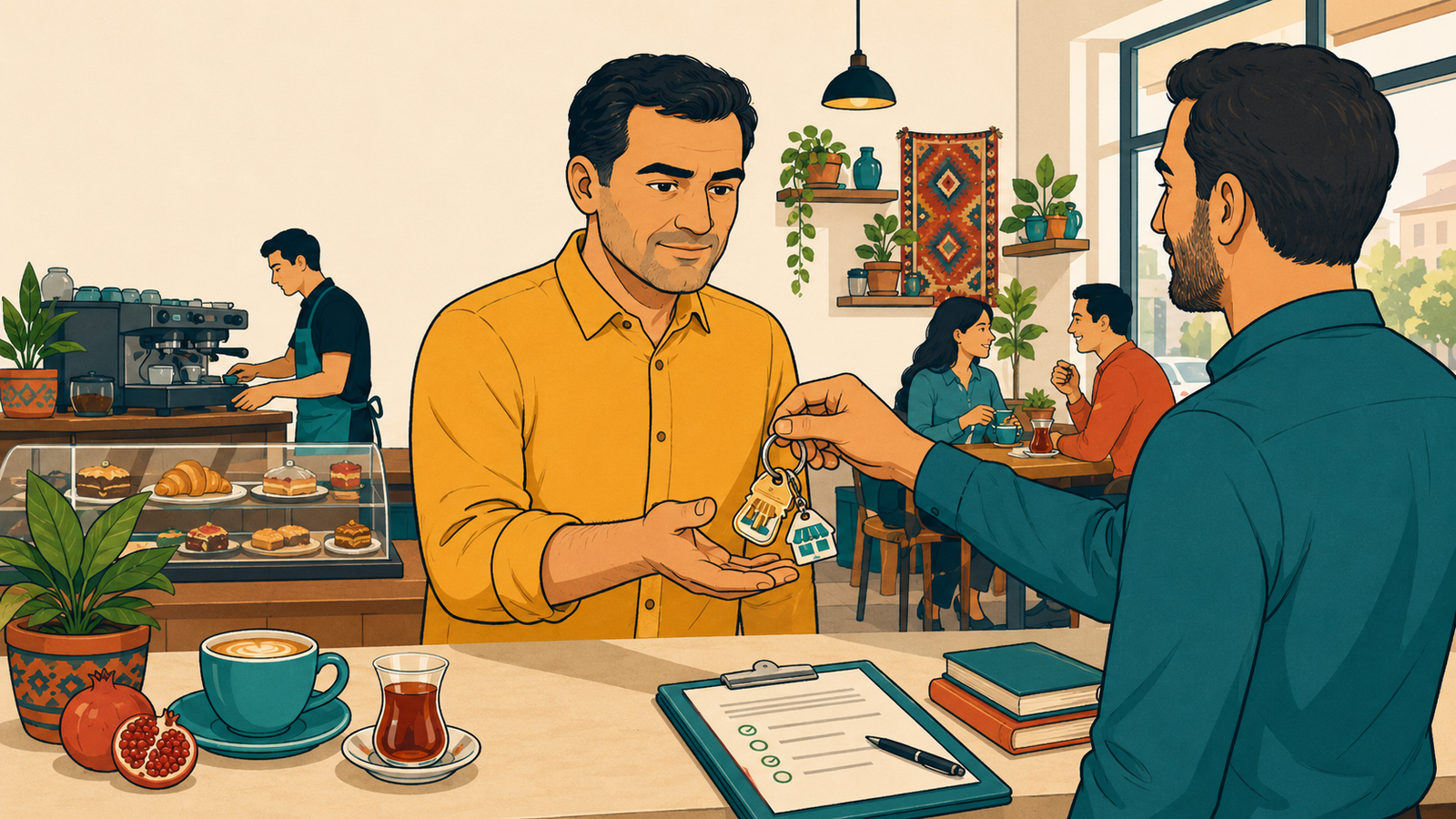
In the franchising world, this is called a transfer — that is, taking over an existing franchise owner's business as it is. There are two paths: either you build an empty space from scratch, or you take over a branch that's already making money. The difference isn't just a matter of taste — it's a matter of money and risk.
1. Building from scratch: long and uncertain
When you open from scratch, the biggest problem is time and unexpected costs.
- Construction, permits, equipment, design — all of this takes months. During this time the space is closed, no money is coming in, but the costs continue.
- The budget is almost always exceeded: construction gets more expensive, supplies are delayed, something turns out to be missing.
- Most importantly: even after opening, no one can guarantee whether customers will come. Everything is based on a projection on paper.
2. Transfer: profit from day one
When you buy a working franchise, the picture is different:
- Sales exist from day one. There are customers, there's a team, the equipment is installed. You're not starting from scratch — you're getting on a moving train.
- Risk is lower, because the location and customer base have already been tested. The answer to the question "Does this place work?" is clear.
- Real numbers are on the table: past sales, tax declarations, profit/loss statements. You decide based on facts, not guesses.
The practical difference: With a build-from-scratch, you have an Excel projection in hand — a wish. With a transfer, you have a bank account statement in hand — the truth.
3. The hidden advantage of a transfer: growth
Buying a branch that makes money is also a more reliable profile for banks. A working business can generate from within itself the strength needed to open a second, third branch. So a transfer isn't just a single shop — it's the beginning of planned growth.
Comparison table
| Criterion | Build from scratch | Working franchise (transfer) |
|---|---|---|
| Initial risk | High — location untested | Low — customers and location proven |
| Budget overrun | Often exceeded | Less likely |
| When money comes in | Months later | Sales exist from day one |
| What the decision is based on | Guesswork (projection) | Real numbers (past sales) |
| Team | Hiring from scratch | Ready, experienced team |
One condition: due diligence
A transfer has only one risk — failing to verify whether the seller's numbers are accurate. Therefore, before a transfer you must:
- Look at the real sales and tax documents of the last 2-3 years.
- Ask the seller "why are you selling?" (Note: the reason for a sale isn't always that the business is failing — there can also be personal reasons like retirement or relocation. Verify the reason with documents.)
- Check the transfer right in the contract — the franchisor must approve this transfer.
Golden rule: Before spending capital, look at the business's "health score." Don't buy a transfer without transparent numbers.
Useful tools
How does DK Agency help?
DK Agency's transfer listings exist precisely for this: it gathers sales listings of operating franchises and businesses in one place. This way, the buyer sees the operation before spending capital, and the seller finds the right buyer. Because for us, a transfer is not just a transaction, it is a mark of trust: The Mark of Mastery, the Shield of the Digital.
Next step: Do you want to buy an operating franchise or transfer your own business? Check out the DK Agency Transfer platform or get in touch for a free initial valuation.
How DK Agency helps
If what this post describes is happening in your restaurant, café or hotel, write to us: we will look at it together and show you the first step. The first diagnostic is free.
Ask KAZAN AI about this topic
Your dish, your numbers. KAZAN AI answers from the DK knowledge base and points you to the right tool.
Open KAZAN AI